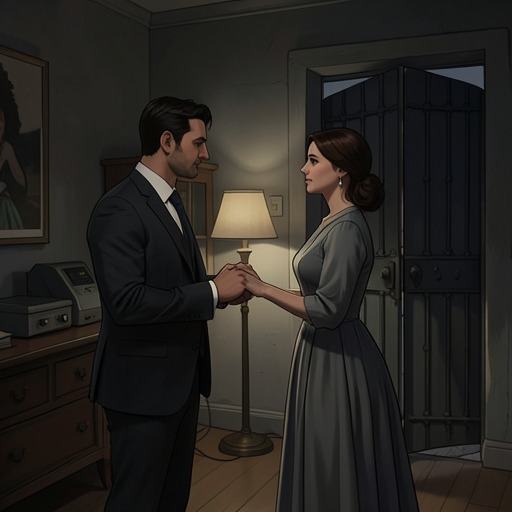
Edward proposes to Florence
On Chesil BeachEdward Mayhew proposes to Florence Ponting after a small advance in their cautious courtship, making the proposal both a declaration of love and a turning point shaped by unequal understanding. The moment brings Edward’s long-contained desire to a head, while Florence’s loving effort to meet him halfway carries a private cost he cannot see.
A Courtship of Gradual Advances
Their intimacy had developed slowly, through permissions neither of them openly discussed. A sudden move by Edward could undo weeks of progress: when he overstepped during an evening at a showing of A Taste of Honey, Florence became quietly remote, although she did not make him doubt that she loved him. The setback shows how little either had learned to speak plainly about desire, and how carefully their relationship depended on unspoken boundaries.
By late March, they were alone on a Saturday afternoon in the disorderly sitting room of Edward’s parents’ small house in the Chiltern Hills. Rain fell outside. In this familiar domestic setting, Florence allowed a brief gesture of closeness that Edward had been longing for. The advance lasted less than fifteen seconds, but its brevity sharpened its importance: after months of restraint and negotiation, Edward understood it as a momentous change.
The Proposal
Edward asked Florence to marry him immediately after she withdrew her hand. The proposal came not as the outcome of a direct conversation about their differences, but in a rush of hope, ecstasy, relief, and surprise at his own decisiveness. For Edward, the moment offered an answer to unresolved desire and a path toward a shared future; the evidence does not establish Florence’s spoken response to the proposal.
Their sudden embraces and emotional excitement briefly displaced the shock Florence had experienced. That interruption matters: the proposal does not resolve the difficulty that preceded it. Instead, marriage is invoked at the height of an intense moment, before Edward recognizes what the physical advance has cost her.
Unequal Understanding
Florence’s gesture was an honest attempt to please someone she loved, but she had to overcome substantial distaste to make it. When she became aware of Edward’s physical response, she recoiled. Edward did not know what she had struggled through, and his astonishment at his own proposal left him little room to understand the contradiction taking shape for her: affection and joy existed alongside aversion.
The proposal therefore marks a change in their relationship without showing that they have understood one another more fully. Edward reads the moment through his hope and desire; Florence experiences it through both love and an unspoken fear of physical intimacy. Their courtship’s established silence persists at the point when frank communication might have exposed that difference, giving the proposal its double force as a romantic commitment and the beginning of a concealed strain.